
AVOID ENEMIES
GAIN INTEL
SAVE TAKEDA

Game overview
A 3D isometric low-poly stealth game created to uncover and learn the legacy of Kunoichi (coo-no-e-chee) going back to the second half of 16th century. Accompany a Kunoichi Maiko on her journey to become a Kunoichi Geisha in the times of feudal Japan. Across 8 levels, travel through the time of clan wars as one of the Takeda clans new espionage agents and discover the background of feudal conflicts and Kunoichi origin. Your journey starts when the Kunoichi were founded and will take you all the way to the great Suruga Invasion! The narrative experience follows 2 story paths simultaneously providing a wider and more detailed overview of not only Kunoichi service but also the political background and situation of feudal Japan. The game itself has been created using Unity, C# and Object Oriented Programming making the project's back-end a system of easily reusable objects and configurable toggles within each scene to allow for better maintenance and an easy way of expanding the game in the future.
Avoid the enemies, gain intel and help Takeda on their feudal campaign!

DISCOVER THE GAME

Play the video to discover more!
(And scroll to the bottom of the page for full gameplay)
PREVIEW


AVOID THE ENEMIES


The game includes 3 types of enemies with different behaviours or skills. The enemies include foxes, red coloured armour and black coloured armour samurai. Foxes have great hearing even asleep. You will need to sneak past them without waking them up or they will alert the samurai. Samurai will follow their patrol routine and watch out for spies. Red dressed samurai are the common enemies that you will have to avoid, they will catch you if they spot you. Black dressed samurai are higher class samurai with better training and skills - they will be able to find you easier than red dressed samurai due to their increased field of view. You will need to avoid all to remain undetected!
NON PLAYER CHARACTER FEEDBACK SYSTEM

For in-game mission briefings, progressive on-boarding and the events when the user does get caught, the game includes a simple Role Playing Game (RPG) like style feedback system. This was provided in order to increase immersion through an additional layer of storytelling (for instance, in-game briefings and enemy detecting the player feedback), add custom enemy feedback upon the player getting caught (enemy types have custom image, name and sentence) and a consistent (with the rest of the User Experience) way of providing the user with on-boarding in training missions. The RPG style feedback visualisation has been found the most suitable for those purposes. The feedback panel includes a Non Player Character image, name and copy as well as a 'close' button allowing the user to hide the panel upon reading.
GAIN INTEL

Steal the secret documents to complete levels! As a Kunoichi you will be responsible for espionage and gaining information to put Takeda few steps ahead of their enemies and help identify the weak spots of clan's targets.
In most levels the gameplay is focused on gaining information through stealing enemy's documents. This mechanic has been chosen to highlight the fact that Kunoichi were used primarily to spy on other clans by visiting their territories undercover (as Geishas) and acquiring information to help Takeda get ahead of the enemies during those visits.
PROGRESS

Complete your missions and help the Takeda clan, unlock new levels and narrative, and keep discovering the story! Each level is a different chapter in Kunoichi and Takeda history. The more you progress, the more you can learn.
BACKGROUND AND PURPOSE
The game's contemporaneity and purpose lie in engaging with the theme of Kunoichi Geisha history in feudal Japan, and its reception in modern Japan. While modern Geisha are a form of Japanese celebrities, in the past Geisha often served through smaller, assistant roles. Moreover, in feudal Japan many women used the profession of Geisha for other purposes such as a cover or use of privileges. In the 16th century a Japanese noblewoman, Mochizuki Chiyome, was ordered to create a group of female ninja agents in service of Takeda clan against other clans. The all-female group called Kunoichi was recruited. The women received training as ninja, Geisha and Miko (shamans or priestesses performing sacred tasks) to ensure their espionage skills, and a cover which would not raise suspicion. To protect the Takeda clan’s power and position, the Kunoichi Geisha served as spies and assassins. Despite their important role not only to the Takeda clan but also to the history of females in their time, nowadays the subject of women warriors of feudal Japan such as Kunoichi Geisha is often overlooked and perceived as controversial. This is due to the contemporary Geisha visage. This game aims to help learn more about the Kunoichi Geisha history and culture through an engaging interaction.
STORY
The narrative follows 2 story paths simultaneously - the journey of a Maiko (Geisha apprentice) becoming a Geisha and the story of Kunoichi from the year the group has been founded to the last significant event before the end of Takeda Shingen's dominion and effectively the formal end of Kunoichi (group's later activity remains unknown). To acknowledge the known number of years of Kunoichi activity, the game includes 8 levels - one for each year (Kunoichi were known to be active between 1561 and 1569). The political background narrative focuses on the 2 key conflicts of that time: Takeda-Hojo (including alliance and war) and Takeda-Uesugi conflicts (including pre and post Takeda-Hojo alliance wars and ending in the realisation of long planned Suruga Invasion). Meanwhile, the Maiko training narrative focuses on Kunoichi history and culture including subjects such as the origin, agent's background, purpose and progression towards Erikae - a ceremony of graduation and Maiko becoming a Geisha.
MISSION TYPES

The game includes 3 mission types of increasing difficulty. You will start with the training missions which will focus on the origin, beginnings and background of Kunoichi - you will explore what happened prior to creating the group, how the group came to being, who the first recruits were, what was their purpose and what did their training include. The training missions are the easiest missions which guide the user through the gameplay mechanics with the use of progressive on-boarding. Then, following the initial training, as a new Maiko you will join practice missions focused on the first plans of Suruga invasion, Takeda-Uesugi conflict and Takeda-Hojo alliance. Those missions are more difficult than the training missions and include levels of medium difficulty (in terms of both the amount of enemies per level and the environment size). After that, you will have a chance to prove yourself worthy of becoming a Geisha through completing Erikae missions which follow the stories of Takeda-Hojo conflict and the realisation of the great Suruga Invasion. Those are the 2 final missions with the highest difficulty level (including the highest number of enemies, collectables and biggest environment size).
LEVELS
 |  |  |  |  |
|---|---|---|---|---|
 |  |  |
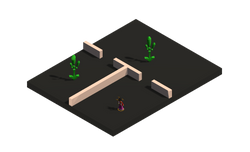
The game includes 8 unique levels - 3 training mission including progressive on-boarding, 3 practice missions and 2 Erikae missions. Swipe through the carousel to view all of them!
PROGRESSIVE ON-BOARDING
.png)
.png)
Progressive on-boarding included in the training mission ensures the gameplay mechanics are easy to learn and understand based on the context - instructions display when a new mechanic or feature is being introduced.
CUSTOMISE YOUR EXPERIENCE


Customise your experience through character creation and name selection! Both features are based on Maiko and Geisha culture and history.
CULTURAL CONTEXT IN DETAIL
The cultural context is an important part of this game. The gameplay features are built and designed around the historical key events and cultural key features. Amongst such gameplay features are Geisha and Maiko appearance, Geisha names, the
narrative, samurai appearance, enso design, level design, User Interface (UI) design and audio selection.
Appearance


Maiko and Geisha are differentiated through few significant appearance differences including hair, make-up and kimono design. Those are explained to the user through informational pop up panels and visualised through the character generation feature. All designs are based on real Geisha and Maiko examples.
Names
All names and surnames used in the game are based on names and surnames of famous Geisha - both historical (e.g. Mochizuki Chiyome) and contemporary figures (e.g. Iwasaki Mineko). References to the most famous Geisha which names have been used in the game are included in the 'References' panel which can be accessed from the splash screen of the game. The importance of using real names is not only due to familiarising the user with the culture of Geisha but also ensuring the user learns the names of the key figures of this culture making it easier to research additional information in the future.
Narrative
The storytelling approach used in the game focuses on adding storytelling aspects to the entire game flow (the user's journey through all the scenes of the game - from home to game screen). This is done through multiple elements such as audio selection, character customisation, NPC and level design. However, the main aspects for sharing contextual details is the use of narrative. The narrative is included at 2 stages - on the level selection screen (through mission briefings) and on the game screen (through NPC instructions). The mission briefings from the level selection screen focus mostly on the political background context, while the in-game instructions (and some mission briefings) focus the Maiko training journey. Both of those aim to explain the cultural and historical context to the player.
Samurai design


Similarly to Geisha, the Samurai design is based on real Samurai appearance.
Enso design


The symbol used in the game to mark the place the player clicked on on the map is based on the Japanese Enso symbol. Enso is a sacred Japanese Buddhism symbol of enlightenment and a common symbol in Japanese calligraphy. Due to its symbolism it is used to mark the destination in the game.
Level design


Some levels were designed to highlight certain parts of the narrative or the Geisha context. For instance, the image on the left shows a level that has been designed for a tea ceremony (an event lead by Geisha to entertain the hosts) during a period in which the new Imagawa clan lord organises celebratory events to raise clan's morale. The room includes classic Japanese furniture such as tea ceremony table or shoji screens. On the other hand, some designs focus on a more subtle way of bringing the culture closer to the user. For instance, the image on the right shows a garden designed to spell the word 'Geisha'.
UI design




To match the Japanese subject of the game, the UI design has been focused on the minimalistic style. All buttons include 2 simple states of animation - idle and hover.
Audio selection
The audio selection for this game is based on popular Japanese folk songs which have been a part of this culture for centuries, for instance Takeda No Komoriuta by Akai Tori.
LEARNING EXPERIENCE


Want to know more? Maiko is a great opportunity to learn interesting facts and find additional resources for you own research! The game provides you with an overview of Kunoichi, Geisha and Maiko history and cultures. Pop ups with information on the key cultural features will accompany you through the entire game flow (from the splash screen, through character customisation screens and even up to game screens). Interesing facts can be found anywhere and the narrative will familiarise you with the political situation. Additionally, recommended bonus resources can be found on a specially dedicated panel on the home screen.
PLAY TO THE SOUND OF TAKEDA
The game uses Takeda No Komoriuta by Akai Tori as one of the audio tracks. The title means Lullaby of Takeda. It's a popular Japanese folk song which originated from Takeda.
IMPLEMENTATION HIGHLIGHTS


The game itself has been created using Unity, C# and Object Oriented Programming making the project's back-end a system of easily reusable objects and configurable toggles within each scene to allow for better maintenance and an easy way of expanding the game in the future. Example of such implementation can be found in the features such as:
-
field of view and enemy detection (customised for enemy types and on instance basis) - all types and instances of those types can be easily changes from scene to scene or instance to instance
-
level mode management - level type can be easily changed from 'on-boarding' to 'normal' from the inspector view and the scripts will adapt on entities to function accordingly. For instance, the collectables will change behaviour depending on the mode. If the 'on-boarding' mode is set to true only one collectable will display at a time to allow for guiding the player through the level
-
enemy patrols - all enemies have custom patrol routes
-
UI management - all screens share the same UI class despite not sharing the same UI elements. The UI manager checks for exciting instances and allows for overwriting some function to allow custom navigation routes (default navigation routes are set, however, to make the code more reusable, custom functions allow for overwriting those settings from object editors)
REPLAY!

Do you wish to play again? Just clear your saved data! The Clear button on the very right of all the buttons on home screen has been included exactly for this occasion! Just remember to be mindful when using it - once the data has been cleared the action can't be undone. But don't worry, a confirmation panel will pop up upon pressing the button to ensure it's not a mistake.
FULL WALKTHROUGH
If you can't play it - enjoy a full gameplay walkthrough!